A classic nihonto represents a gorgeous masterpiece of skill, but assume you need to manifest your personal character? Customizing your armament is a fulfilling journey, allowing you to design a truly uncommon piece. From the grip wrapping and fastening to the tsuba design and tempering curve, each element offers a chance for bespoke design. This exploration delves into the domain of katana transformations, providing information for both starters and well-versed enthusiasts looking for to imprint their endorsement on the historic art of the samurai.
Novice's Verified Craftsmanship
For enthusiasts ready to embark on the advantageous journey of classical sword techniques , 1060 steel katanas extend an excellent entry point. This certain grade of elemental-based steel finds a suitable blend between price and efficiency . While below hard as leading steels, 1060 accommodates a reasonable level of honing , making it ideal for starters to cultivate the preliminaries of blade preservation and appreciate the elegance of handcrafted Japanese weaponry. It’s a great choice for acquiring experience without the monetary burden of more complex steels.
Type T10 Edges : Managing Efficiency and Budget
Enabling aficionados seeking an authentic saber experience without busting the finances , T10 metal katanas represent a attractive option. These blades offer a noticeable improvement in durability compared to lower-grade alternatives, exhibiting reasonable edge retention and satisfactory flexibility for primary severing techniques. While not rivaling the outstanding characteristics of top-tier steels like T100 or folded metal , T10 provides a remarkable blend of capacity and budget-friendly nature , making them a trendy choice for novices and those on a restrained revenue .
Surpassing the Steel : Customizing Your Weapon's Accessories and Hilt
Although the glazed cutting edge is undeniably the main point of a katana, truly elevating its grandeur lies in the deliberate customization of its ornamentation and hold. This technique allows collectors to present their exclusive preference . Assess the extensive possibilities: menuki - decorative decorations that bring visual appeal ; the hamon protective covers – often carefully engraved ; the tsuka center itself, wrapped in traditional ito cord ; and the fusa pommel , which can be created from various substances like ingots or antler .
- Adopt styles that match with you.
- Investigate with various components .
- Accent durability for a stable statement .
The Charm of the Katana: Heritage, Workmanship, and Metal
Such katana retains a incomparable allure, steeped in ages of eastern history and practice . More than merely a tool of conflict , it's a sign of the samurai ethos – a fusion of expertise and command . Its development spanned many generations, with early cutting instruments evolving into the slender curvature and lethal edge we identify today. The manufacture involved is truly spectacular, requiring years of study to excel at . The process involves a sophisticated folding of tamahagane , creating layers that strengthen the weapon’s flexibility and hacking ability. Different schools of forging emerged , each with their specific secrets and procedures for achieving the exceptional balance and keenness - a truly demanding pursuit.
- Primitive Katana types
- The part of the cutting armament in soldier culture
- Established processing practices
Selecting the Ideal Steel for Your Japanese Sword Project: 1060 vs. T10
Selecting the right steel is remarkably important for any blade project, and the selection between 1060 and T10 can be complex. 1060 is a widely used American 1060 steel katana metal, offering a decent balance of strength and resilience, making it appropriately easy to condition. However, T10, a Asian steel, habitually boasts heightened wear fortitude and can likely achieve a increased peak hardness, although it can be considerably demanding to work with and requires detailed heat forging. Consider your competency and targeted characteristics: for a newcomer, 1060 may be a prudent inception, while the competent smith might prefer the enhanced properties of T10.
- Accessibility of Controlling
- Corrosion
- Peak Hardness
Revealing the Strength: Expert Katana Improvement Strategies
Perfecting the skill of sword tuning extends far beyond basic whetting. Serious masters are now investigating advanced techniques to truly expose a blade's hidden potential. This features intricate work with the temper pattern, utilizing specialized compositions for differential strengthening and carefully choosing the outline of the protector to optimize balance and performance. Beyond purely functional customizations, artisans are increasingly focused on producing unparalleled aesthetic magnificence, through complex incising and layered varnishes that truly transform a katana into a magnum opus.
Building a 1060 Sword from Basic Metal to Beauty
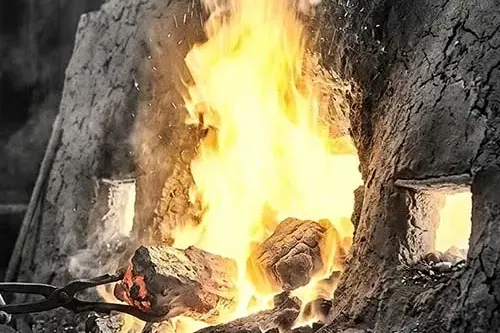
The journey commences with plain 1060 iron , a solid material far distant the fine katana it will evolve . Accomplished bladesmiths utilize a sophisticated process of layering and forming the raw steel, repeatedly burning it and flattening it to discard impurities and build a uniform grain structure. This exhausting process, often going on for periods , builds the fundamental resilience and suppleness characteristic of a original Japanese blade . Extra heat refinements, including accurate hardening and conditioning , are mandatory to achieve the intended steadiness of sharpness, robustness and beauty .- Doubling: Decreases impurities and generates grain structure.
- Forging: Models the steel into the initial blade form.
- Conditioning: Regulates the final hardness and flexibility.
The Ongoing Allure of the Katana: Detailed Survey of Metal and Enhancement
Each traditional katana stays a potent symbol embodying Japanese custom , its enticement far surpassing mere combat tools . Forged from unique steel and commonly featuring intricate motifs , the procedure of creation itself is a honored art. Beyond the central craftsmanship, the ability to reshape a katana - from the patterning to the grasp wrapping and habaki - allows for a genuinely individual statement for both admirers and wielders alike. This fusion of time-honored steelwork and boundless personalization results in the katana's continued prominence across the planet .
